CONLOG ADVANCES RT29 SMART METER ROLLOUT IN ENDUMENI AND RAYMOND MHLABA MUNICIPALITIES
Conlog has completed RT29 smart meter rollouts in Endumeni Local Municipality and Raymond Mhlaba Local Municipality, building on earlier implementations in Emalahleni and Dihlabeng. These earlier projects established the operational foundation and implementation learnings that informed subsequent deployments, particularly in relation to rollout sequencing, system integration, and stakeholder coordination.
Facilitated by the National Treasury Smart Meter Grant Fund, the rollouts form part of ongoing efforts to modernise municipal electricity infrastructure and improve the management of electricity distribution networks. The focus is on strengthening billing accuracy, network visibility, and revenue protection.
A Scalable Model for Smart Metering Implementation
The RT29 rollout in both municipalities was structured not only as an installation programme, but as a model to inform future smart metering initiatives across varying municipal environments.
A total of 10,690 smart meters were deployed in Endumeni, with 3,000 meters installed in Raymond Mhlaba.
Following contract awards in April 2025, implementation commenced in June 2025 for Endumeni and August 2025 for Raymond Mhlaba. The Raymond Mhlaba rollout was completed by October 2025, while Endumeni reached completion in January 2026.
The phased implementation approach enabled alignment between installation activities, system commissioning, and municipal readiness. This reduced disruption while supporting controlled integration into existing infrastructure. It also allowed for early identification and resolution of integration or configuration issues during rollout.
Enabling Visibility and Operational Control
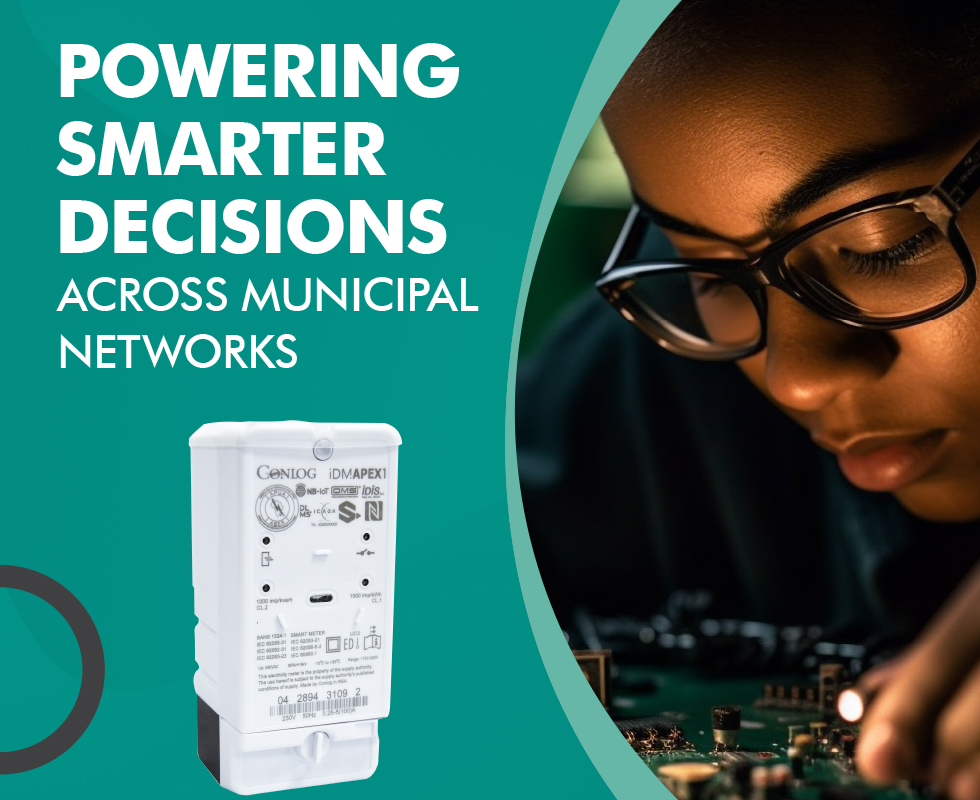
The rollout utilised Conlog’s APEX Smart Metering Solutions, selected to align with the operational requirements of each municipality.
Endumeni deployed APEX 1 and APEX 3 meters, while Raymond Mhlaba implemented APEX 1 meters. These systems provide enhanced visibility across meter networks, enabling municipal teams to monitor performance in near real time and respond more efficiently to outages, faults, and irregular consumption patterns.
The system architecture supports improved data acquisition and validation, enabling more reliable billing inputs and reducing discrepancies associated with manual or legacy metering systems.
The technology supports accurate billing through improved data integrity, while also enabling the identification of tampering and illegal connections. This contributes to reduced non-technical losses and improved network reliability.
The availability of consistent, time-based consumption data enables more granular analysis of demand patterns, supporting improved load profiling and network planning.
This shift towards data-driven monitoring represents a transition from reactive maintenance to proactive network management, allowing municipalities to prioritise interventions based on system-generated insights.
Operational and Financial Outcomes
The RT29 rollout resulted in measurable improvements in both operational efficiency and revenue management.
Improved billing accuracy and reduced non-technical losses support stronger revenue collection, while increased system visibility enables faster response to outages and service disruptions.
Access to granular consumption data allows municipalities to identify usage patterns and anomalies, supporting more informed planning and load management.
Improved data availability also supports more transparent reporting and auditing processes, strengthening accountability in revenue management.
For end users, smart metering provides access to consumption data and supports more informed electricity usage and purchasing behaviour through mobile-enabled platforms.
These outcomes contribute to improved financial sustainability and more consistent service delivery, supporting municipalities in maintaining and upgrading infrastructure over the long term.
Community Engagement and Implementation Support
Community engagement formed an integral part of the rollout approach in both municipalities and was embedded within the broader implementation strategy.
Pre-installation activities included councillor briefings, radio and newspaper campaigns, and the distribution of informational materials. During implementation, ongoing communication ensured residents were informed of rollout schedules and potential service interruptions.
This structured engagement approach supported user understanding and adoption of smart metering systems, reduced resistance, and enabled smoother installation processes at scale.
Clear communication channels also allowed municipalities to address queries and concerns efficiently during rollout.
Extending Impact Beyond Installation
Conlog’s involvement extended beyond installation through a structured three-year support programme.
This includes system monitoring, maintenance, and reporting, as well as initial training to support long-term municipal ownership.
The approach ensures system stability while enabling the transfer of skills required for sustained operation. Conlog’s Training Academy supports this through structured training programmes aimed at building technical capability within municipal teams, particularly in system management, data interpretation, and fault response.
This model reduces long-term reliance on external intervention, enabling municipalities to progressively internalise system management capabilities.
Local Economic Participation
The rollout contributed to local economic activity through the inclusion of local technicians, installers, SMMEs, electricians, and apprentices in project delivery.
This supported skills development aligned to smart metering technologies, contributing to a broader base of technical capability within the local economy.
It also enables municipalities and communities to retain and apply these skills beyond the lifecycle of the project, particularly in relation to maintenance and future system expansion.
Supporting Future-Ready Electricity Networks
The implementation of smart metering under the RT29 programme reflects a broader shift towards more intelligent electricity distribution systems.
As municipalities adapt to increasing energy demands, infrastructure constraints, and the integration of distributed and renewable energy sources, systems capable of balancing supply and demand become increasingly important.
Smart metering provides a foundation for this transition by enabling improved visibility, control, and data-driven decision-making across electricity networks.
Over time, this can support more advanced functionalities, including demand-side management and more efficient integration of decentralised energy resources.
“Successfully executed smart metering projects are not just a technology upgrade — they are a strategic tool that strengthens revenue collection, improves quality of service, and builds a more transparent relationship between municipalities and their communities,” a Conlog executive noted.
As municipalities continue to modernise electricity infrastructure under increasing operational and financial pressure, the outcomes of the RT29 rollouts in Endumeni and Raymond Mhlaba provide a practical reference point for future implementations.
The projects demonstrate how structured deployment, supported by appropriate technology and sustained capacity-building, can deliver measurable improvements in network management, revenue protection, and service delivery, while establishing a foundation for more resilient, transparent, and data-driven electricity systems.